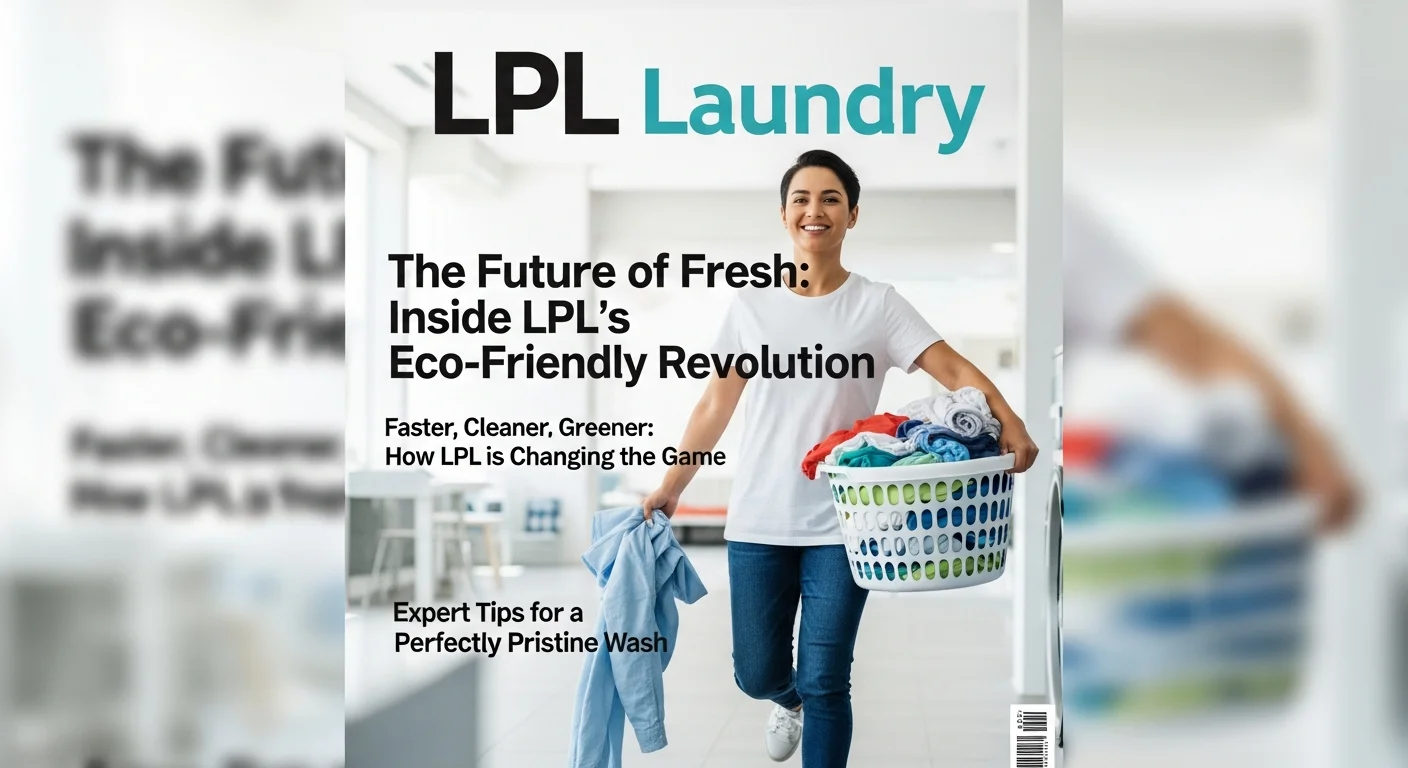
The commercial laundry industry is currently navigating its most transformative era. No longer seen as a back-of-house utility, laundry is now at the forefront of the global movement toward corporate sustainability and digital precision.
In this deep dive, we explore the cutting-edge technologies and eco-strategies that are reshaping how London's hospitality and corporate sectors manage their textiles.
1. The Rise of Hyper-Efficiency through AI & IoT
Artificial Intelligence (AI) and the Internet of Things (IoT) are revolutionizing the throughput of modern laundry facilities. By embedding smart sensors into industrial tunnel washers and ironers, facilities can now operate with surgical precision.
Predictive Diagnostics
Modern machines now utilize machine learning algorithms to monitor their own health. These systems can detect subtle changes in vibration or heat that suggest a mechanical part is nearing the end of its life. This shift from reactive to predictive maintenance ensures that our facility maintains 100% uptime, even during London's busiest tourist seasons.

Smart Chemical Dosing
Traditional laundry often suffered from "chemical fatigue"—the overuse of detergents that weakened fabric fibers. Today, IoT-connected dosing pumps inject biodegradable cleaning agents at the milligram level, adjusted dynamically based on the weight and soil-level of each batch. This results in cleaner linens that last up to 40% longer.
Expert Insight: RFID Tagging
We are increasingly seeing hotels adopt RFID-tagged linens. Each towel or sheet carries a tiny, washable chip that allows for 100% inventory accuracy. This technology eliminates loss and ensures that no guest ever receives a linen item that has exceeded its maximum wash-cycle life.
2. Sustainability: Beyond the Buzzword
For London businesses, sustainability is no longer optional. With the city's focus on Net Zero targets, the laundry industry has had to innovate rapidly to reduce its massive water and energy footprint.
Closed-Loop Water Recycling
The "Future" laundry facility is one that recycles the majority of its water. New ceramic filtration systems and heat exchangers allow us to capture the water from a final rinse, filter it to a near-potable standard, and use it for the next initial wash. This can reduce total water consumption by over 70%.
Low-Temp Chemistry
Historically, thermal disinfection required water temperatures of 71°C or higher. Modern enzymes and professional ozone systems now provide the same—if not better—disinfection at just 40°C. This drastic reduction in heating requirements is the single biggest factor in lowering the carbon footprint of commercial laundry.
3. The Circular Economy & Textile Life-Cycle
What happens when a towel is no longer "5-star" quality? In the past, it went to a landfill. In 2026, the industry is moving toward a circular model.
At London Premium Laundry, we are partnering with textile recyclers who can take retired cotton linens and repurpose them into new insulation materials or even high-grade paper products. This ensures that the life-cycle of the fiber doesn't end at the laundry door.
Partner with the Future
London Premium Laundry is more than just a service provider; we are your strategic partner in the transition to a high-tech, sustainable future. Contact us today to see how our modern approach can benefit your business.